®
®

Ch. 4
Ecos de la Cueva
A carving in the cave looks like a map to the treasure.
Write and revise your book with AI in one studio: an editor, characters, chronology and export tools. You decide how much the AI does.
Private beta · Start at €0
Start at €0
100% manual writing ← AI assistance → AI generation. Move across the whole spectrum inside the same book, chapter by chapter. The author always keeps control.
Write and edit every word. Woodocs keeps characters, places, context and continuity at hand without getting in the way of your writing.
Develop a scene, review a passage, look for alternatives or continue a paragraph. Nothing changes without your decision.
Woodocs can develop chapters using the world, characters and rules you have built.
Your next book starts tonight — and never stops growing.
Woodocs doesn't improvise paragraph by paragraph: before writing the first sentence, it builds your book's narrative map — its Story Bible — with the full arc, the characters, the world and the key events. Then it always writes ahead of your reading.
You read the present. Woodocs already knows the way.
A carving in the cave looks like a map to the treasure.
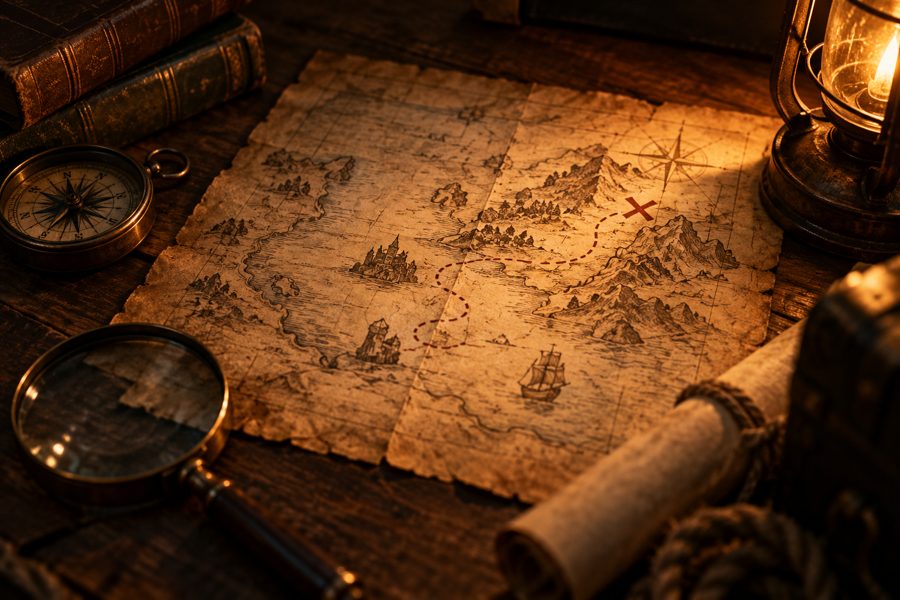
A dark figure in the cave turns out to be a guardian.
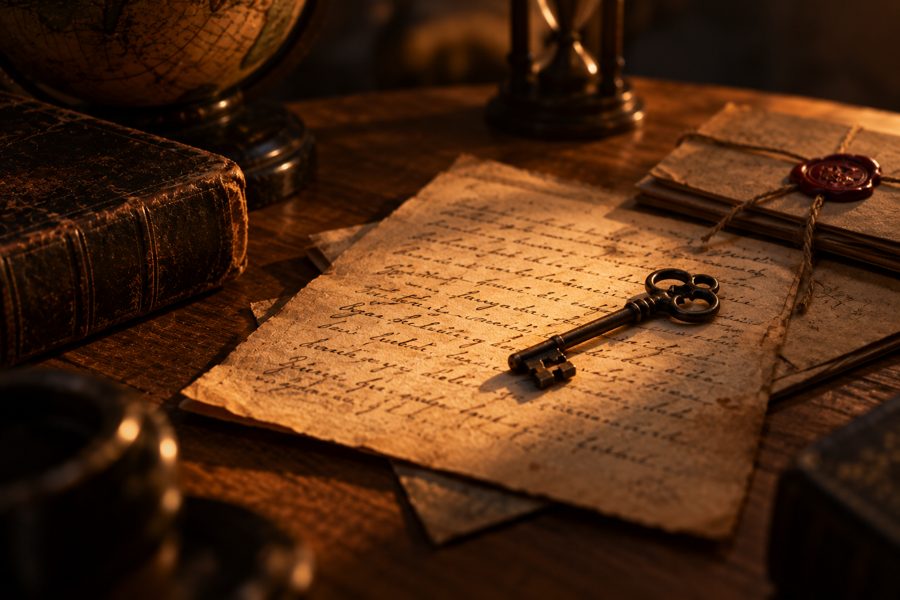
An old man holds answers about Captain Lorenzo.

A storm at sea and a sunken cave.
The story keeps waiting for you…
Ready for when you get there.
Genre, tone, audience, a starting sentence — or just an adjective and a literary reference. Or bring the manuscript you have already started.
Woodocs proposes a concrete premise — the story's engine. Accept it, rewrite it or ignore it: it is yours.
Characters, places and timeline in the Story Bible: you fill them in, the AI suggests them, or half and half. It is the memory that prevents contradictions.
Write each chapter yourself in the editor, develop it with assistance, or let Woodocs generate it consistently with everything before. Your call, every chapter.
EPUB for your e-reader, print-ready PDF, Word to edit — or share it on the Woodoteca.
Studio turns the book's memory into living profiles: characters, places, timeline, relationships and plot threads. You build them, the AI suggests them, or half and half — and you consult them while you write, or the AI reads them before continuing for you. So nothing contradicts itself past chapter twelve.
Personality, motivations, backstory, character arc, and what each one knows — and hides.
Atmosphere, floor plans, their own history, and the role each setting plays in the plot.
Events, milestones and plots linked by cause and effect — never two dates stepping on each other.
Who knows whom, and in exactly which chapter the reader finds out what they didn't know.

A young, fearless, dreamy lighthouse keeper, always looking for something beyond what he has. His voice is firm, but sometimes betrays doubt.

From the main island, curious and duty-bound; she carries the legends of her land more than she knows.

An old sea dog obsessed with the treasure: overbearing, sarcastic — and with a diary revealing he sought redemption, not gold.
Where Gabriel keeps watch and where the map appears: the light that guides others while he looks for his own course.
Carvings and murals telling the story of the Captain and the guardians; the dark figure appears there, and later the diary.
Reached only through the storm; a map reveals the real treasure is not material.
Gabriel finds a treasure map and decides to risk everything; he shows it to Elena.
They cross the storm to the cave; the map reveals the treasure was the journey.
Elena descends from the guardians: the quest becomes a mission to preserve the legacy.
With Elena: accomplices in an adventure the storm turns into a shared mission.
With the guardians: her own blood, discovered on the cavern mural.
Known to the guardian — revealed in chapter 10.
The Woodocs editor is not a word processor with an AI button. It keeps the Studio cards open, remembers what you promised the reader eight chapters ago, and only suggests when you ask: nothing enters your book unless you decide it.
Gabriel’s footsteps echoed softly through the cave as they moved forward. The sound of their movements faded into the damp walls. The lantern light in his hand danced unsteadily over the uneven surfaces, casting capricious shapes that seemed to come alive only to vanish at once. @Elena, at his side, kept a watchful eye, as if expecting something more than shadows to reveal itself at any moment.
“Look at this,” said Gabriel, stopping before a section of wall where strange figures intertwined in an intricate relief.
@Ele came closer, narrowing her eyes to make it out. The images showed a kind of rudimentary map, adorned with mythical figures and symbols that seemed to flow into one another.
“Looks like we’ve found something important,” Gabriel murmured, tracing the lines with his fingertips. “Too important, perhaps,” Elena replied, a trace of unease in her voice.Tab
Gabriel’s footsteps echoed softly— tap to jump to the text.
here it mentions... something that protects the treasure— suggested:
Here it mentions something that might protect the treasure.
Gabriel let out a sigh, but did not look away from the carvings. “Here it mentions... something that protects the treasure. “Here it mentions something that might protect the treasure. I don’t know whether to believe it or think it’s just another way to scare off the curious.”
“I wouldn’t underestimate it,” Elena replied. “Stories have an origin, and we might be standing in front of one.”
Silence wrapped around them, broken only by the steady drip of water from the cave ceiling. A faint tremor ran through the ground, like a barely perceptible warning.
The ellipsis leaves the idea hanging; this way it reads clearly the first time.
Suggests the next sentence in grey, in your book’s voice. Tab accepts it; keep typing and it disappears.
Type @ and your characters and places appear. If the name doesn’t exist yet, create the card without leaving the paragraph.
Rename a character in eleven chapters at once: whole word, with a preview before anything changes.
Words per chapter, pace, dialogue ratio and repetitions — for the whole book, not just the page.
Your chapter exactly as a reader will see it, in the same Woodocs reader, without leaving the editor.
Every AI call shows up in a queue with its status. You keep writing in the meantime.
And the day you’d rather have the AI write a chapter for you from your scenes, the button is right there. You decide when.
In branching mode, every decision opens its own path — Woodocs keeps things consistent on every branch, not just the one you chose.
A young lighthouse keeper finds a treasure map in the lighthouse's old archive.
What to do with the map?
Talking to Elena might reveal unexpected clues…
Studying the map in detail might be safer…
Ch. 5
Ch. 6
More to discover…
Ch. 5
Ch. 6
More to discover…
← swipe to see the full tree →
In The Lighthouse of Decisions, the reader made it this far. The story offered two paths. They chose one. Woodocs kept writing from that decision.
«Carefully, he took it out of the box and unrolled it, the crackling paper whispering old promises. Before his eyes lay a map drawn with lines and symbols that seemed to tell a story from centuries past.»
32 narrative parameters — pace, dialogue density, sentence musicality, irony, introspection — control how your book sounds. Start from a ready-made voice, pick one from over 200 reference authors, or dial each knob by hand.
Drag a control — the voice jumps to the closest match among 200+.
Grandmother kept the May rains in glass jars, and whenever someone lied in her kitchen, the lids loosened on their own.
Write, read and grow your story in Woodocs. Export it whenever you want, in whatever format suits you best. No limits. No platform lock-in.
A generated cover is a picture: the text it already carries cannot be separated. To edit it, start from an image without lettering and add text layers.
A young lighthouse keeper, a map that appears one night on watch, and a storm that turns the adventure into a mission. Gabriel and Elena will discover that the real treasure was never gold.
WOODOCS The Lighthouse
Select an element on the canvas or in the layer list.
RGB PNG. Check sizes, image resolution and your printer’s colour requirements before printing. Guides are not exported.
The AI doesn't just generate a cover image: it designs the complete wraparound cover in the exact format Amazon KDP requires — front cover, spine with the title and author, and back cover — so your book exists on paper too, with the same quality as any publishing house.
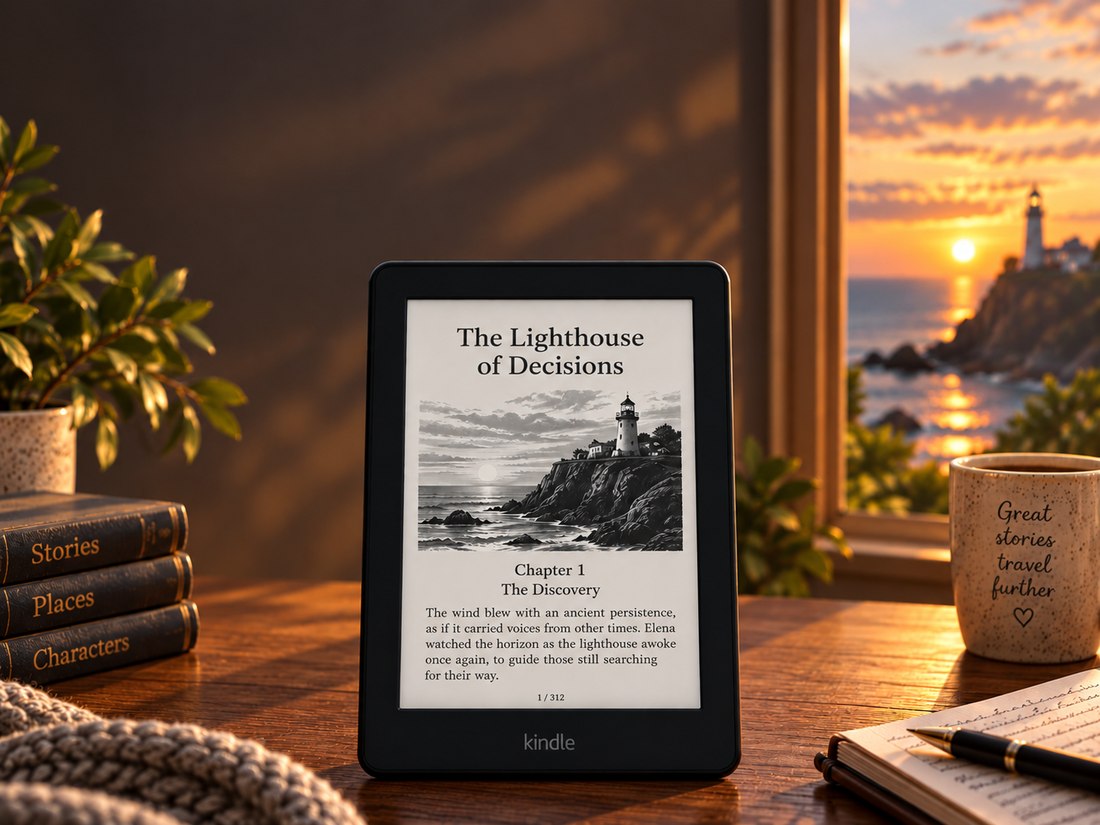 EPUB
EPUB
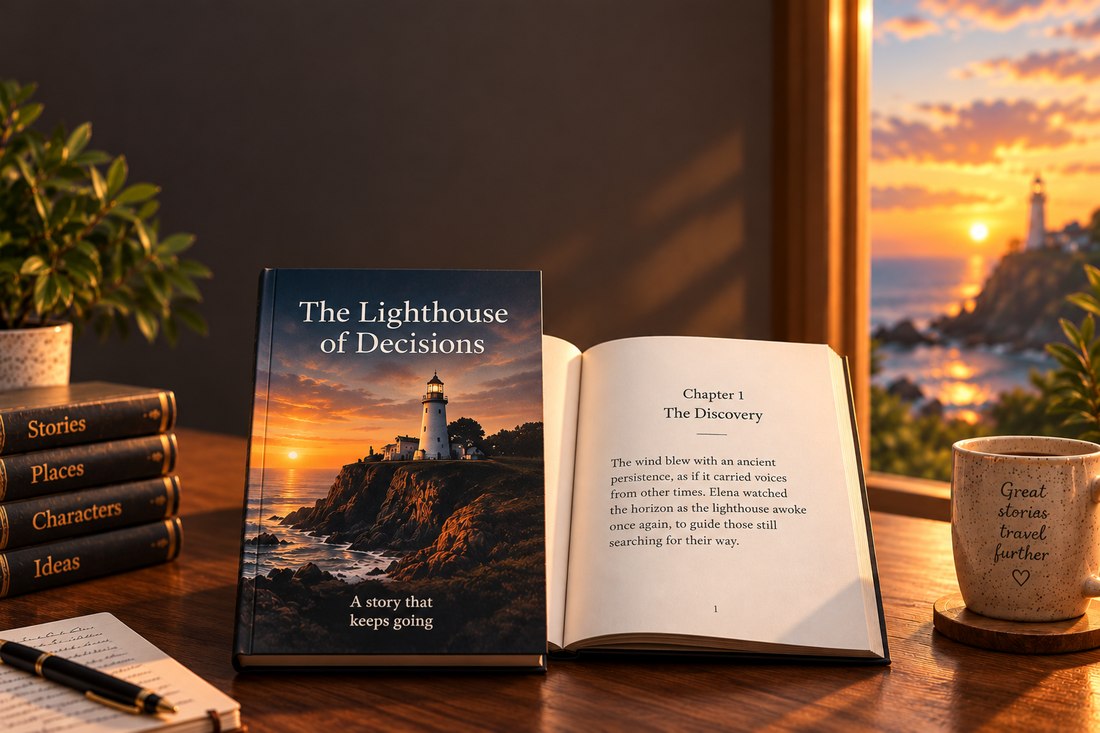 PDF
PDF
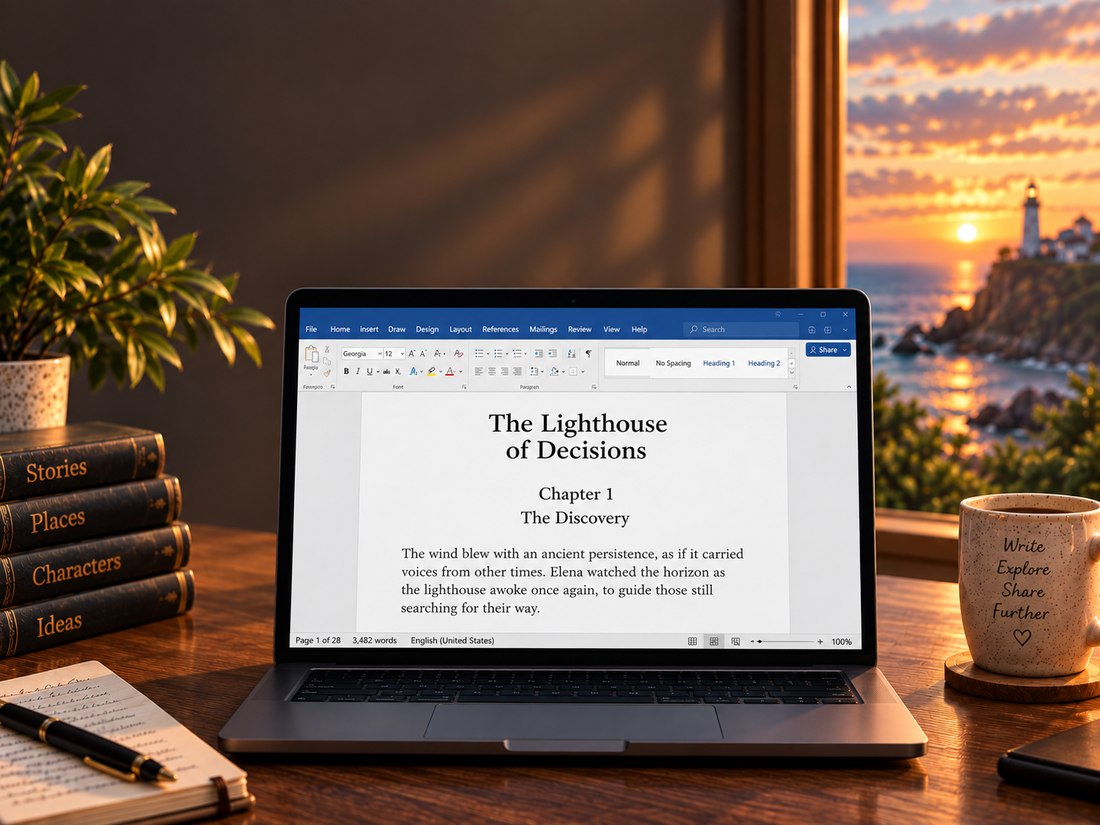 DOCX
DOCX
 PaperbackFlexible and light
 HardcoverRigid cover
Validate your edition and choose the shipping to see the price.
No orders yet.
Order printed copies straight from the machine room: Woodocs prepares the interior and the wraparound cover in the exact format the printer requires, shows you the final price — printing, shipping and taxes — before you pay, and tracks the order to your door. Today with Lulu, built into the platform itself; and since the print-ready PDF is yours, it works just as well with Amazon KDP or any printer you choose.
Share your book, follow the stories you care about, and discover new worlds written by the community.
Start free. Change edition the day your story asks for it.
Woodocs is in private beta. Request access, tell us what you want to write and pick the edition you'd like to try: we review every request by hand, and once you're in you'll get invitations to bring other authors along.
Write it. Develop it. Let it grow.
Private beta · Start at €0
Start at €0